Create a Cozy Patchwork Crochet Quilt with Hexagon Motifs
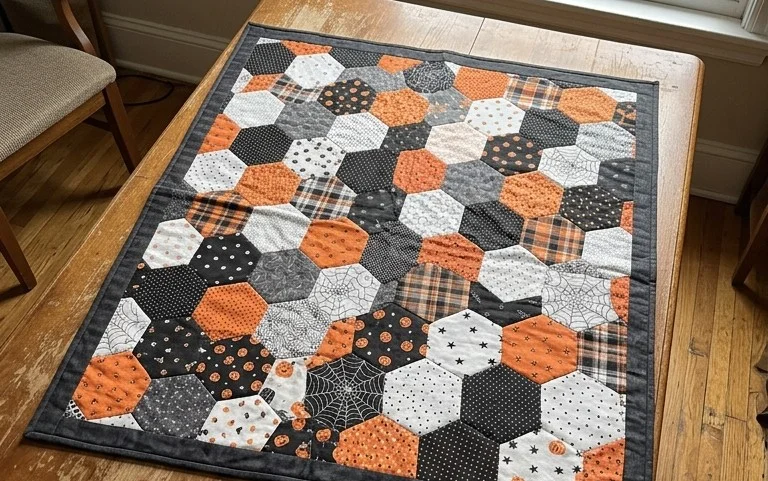
Large crochet hexagons give this quilt a clear geometric look, with broad color blocks and gently angled edges joining into a cozy blanket. The finished fabric has a softly textured, handmade feel that works well folded over a sofa or spread across a bed. If you enjoy home décor projects, this one gives you room to choose colors that suit your space, while gift makers can tailor the palette to someone special. Beginners who know basic crochet stitches can take it one motif at a time, and more experienced crocheters can settle into a satisfying rhythm. The tutorial explains how to shape the hexagons, keep their edges consistent, and join the pieces into a flat quilt, with practical guidance for finishing the outer edge. You can follow the color plan or make each motif your own.
Why You’ll Love This Pattern
A firm cotton dishcloth with a simple single-crochet fabric is useful at the sink and easy to make in a spare evening. This rectangular pattern uses one stitch throughout, so you can focus on keeping the edges straight rather than learning a complicated repeat.
The finished cloth is a practical handmade gift, and one 50 g ball of worsted cotton is usually enough. Its close stitches make a sturdy fabric that can handle regular washing. If you have leftover cotton yarn, you can use it for stripes, keeping in mind that each color change adds ends to weave in.
The sample is worked in rows, with 30 stitches across. A stitch marker at the beginning of each row helps you spot the turning chain and avoid accidentally adding stitches along the edges.
The rows were easy to keep track of, and the cotton cloth feels sturdy after its first wash.
— June, home crocheter
Pattern Overview & Skill Level
- Skill Level: Beginner. You need to chain and make single crochet stitches.
- Approximate Time: 2–3 hours, depending on your pace and how often you pause to check your rows.
- Construction: A flat rectangle worked back and forth in rows, without a separate border or seam.
- Finished Dimensions & Sizing: Approximately 8 × 8 in (20 × 20 cm) after washing and drying flat. Small differences in tension may change the final size.
Materials & Supplies Needed
- Yarn: About 90 yd (82 m) of worsted-weight (#4) 100% cotton yarn in one color. Cotton absorbs water and holds up well to frequent laundering.
- Hook: 5.0 mm / H-8 crochet hook. Use the hook that gives you a firm, flexible fabric rather than a stiff one.
- Notions: Tapestry needle for weaving in the yarn ends, scissors, and one locking stitch marker to mark the first stitch of each row.
- Substitutions: A similar amount of cotton-linen yarn can work, though the cloth may feel less soft. Avoid acrylic if you want a highly absorbent dishcloth. Thicker yarn or a larger hook makes a larger, looser cloth and uses more yarn; finer yarn or a smaller hook makes a smaller, denser one.
For a consistent result, use the same yarn weight and hook throughout. If you substitute yarn, make a small swatch first: a cloth that is too loose may feel floppy, while tight stitches can make it stiff and difficult to use.
Stitch Guide & Abbreviations (US Terms)
- ch: Chain.
- sc: Single crochet. Insert the hook in the indicated stitch, yarn over and pull up a loop, then yarn over and pull through both loops on the hook.
- st / sts: Stitch / stitches.
- rep: Repeat.
- yo: Yarn over.
The turning chain at the start of each row does not count as a stitch. Work the first single crochet into the first stitch of the row, not into the turning chain. This keeps the sides straight and maintains a stitch count of 30.
Step-by-Step Pattern Instructions
Dishcloth
- Foundation: Ch 31. Keep the chain relaxed so the lower edge does not pull in.
- Row 1: Sc in the second ch from the hook and in each ch across. Turn. (30 sts)
- Row 2: Ch 1, sc in each st across. Turn. (30 sts)
- Rows 3–30: Rep Row 2. Mark the first stitch of each row if you tend to miss the edge stitch. At the end of Row 30, do not turn. (30 sts per row)
Count the stitches occasionally as you work. Each row should have 30 single crochet stitches, and the turning chain is not included in that count. If the cloth begins to widen, you may have worked into the turning chain at the row end. If it narrows, check that you have not skipped the first or last stitch.
Finishing
Cut the yarn, leaving a tail long enough to weave in securely, and pull the tail through the final loop. Thread it onto a tapestry needle and weave it back and forth through several stitches on the wrong side. Change direction once before trimming the excess so the end is less likely to work loose during washing. Weave in the starting tail the same way.
Wash the cloth before measuring it. Cotton can relax slightly after washing, and gentle reshaping while damp helps the corners settle into a square. This pattern has no separate border; the single-crochet edges form the finished sides.
Care & Washing Instructions
- Wash cotton dishcloths in a machine at up to 40°C (104°F), or follow the yarn label if it gives a lower temperature.
- Dry flat when possible, smoothing the edges into shape; avoid high heat if the yarn label warns against it.
- Reshape the damp cloth by hand and lay it flat to dry. Blocking is optional for this everyday item.
Pro Tips & Common Mistakes to Avoid
- Keep your tension even across the foundation chain. If that edge is much tighter than the rows, use a hook one size larger just for the chain, then switch back to the 5.0 mm hook.
- Mark the first stitch of each row and count to 30 before turning. The last stitch can be easy to miss because it sits beside the turning chain.
- Weave in each end with a tapestry needle on the wrong side, passing through several stitches and changing direction. Do not leave a short tail that can come loose with repeated washing.
- To make a wider cloth, add an even number of chains and work one fewer single crochet than the chain count. Each extra pair of chains adds about 1/2 in (1.3 cm) at this gauge and increases yarn use. Add rows to make it longer.
Frequently Asked Questions
Can I use a different fiber instead of cotton?
Cotton is a good choice because it absorbs water and is easy to wash. Cotton-linen blends can also work, but may feel firmer. Acrylic is less absorbent, so it may not work as well for drying dishes or wiping wet counters. Check the yarn label for washing instructions.
How can I make the cloth larger or smaller?
Change the foundation chain for the width, then work more or fewer rows for the length. Keep the same relationship between the chain and first row: a chain of 31 gives 30 single crochet stitches. A larger cloth takes more yarn and time; a smaller cloth takes less.
Is this pattern suitable for a first crochet project?
Yes. It uses chains and single crochet, with no shaping or joining. The main challenge is keeping 30 stitches in every row. Marking the first stitch and counting at row ends makes that easier to manage.
May I sell dishcloths made from this pattern?
You can sell items you make if the designer’s terms allow it. Check those terms before listing finished cloths, and write your own product description and photographs rather than presenting the pattern itself as your work.
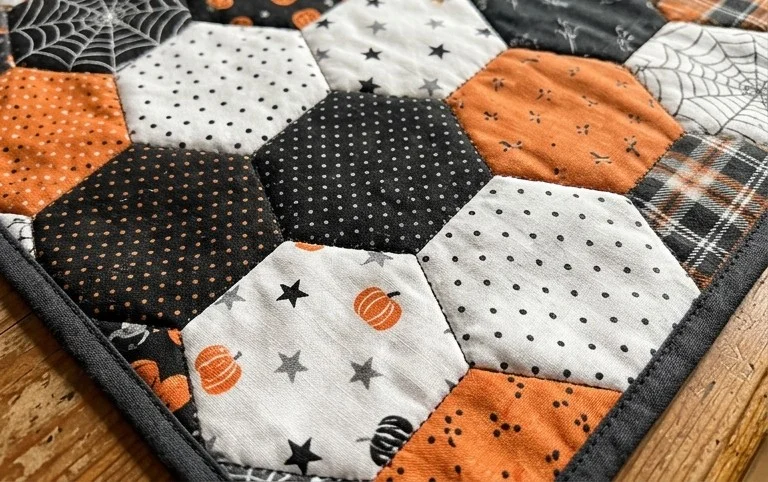
Once the last hexagon is joined and the edge is finished, you’ll have a substantial crochet quilt with a pattern that draws the eye without making the room feel busy. A simple variation is to work the motifs in two shades of the same color for a quieter, coordinated look. Take a photo of your finished blanket on the sofa or folded across a bed, and share it on Pinterest or your favorite social platform so other crocheters can see your color choices. If you enjoyed working motif by motif, explore more free crochet patterns on the blog for your next home project. Keep the pattern handy when planning another size or color combination.