Nordic Star Table Runner Free Pattern for Beginners
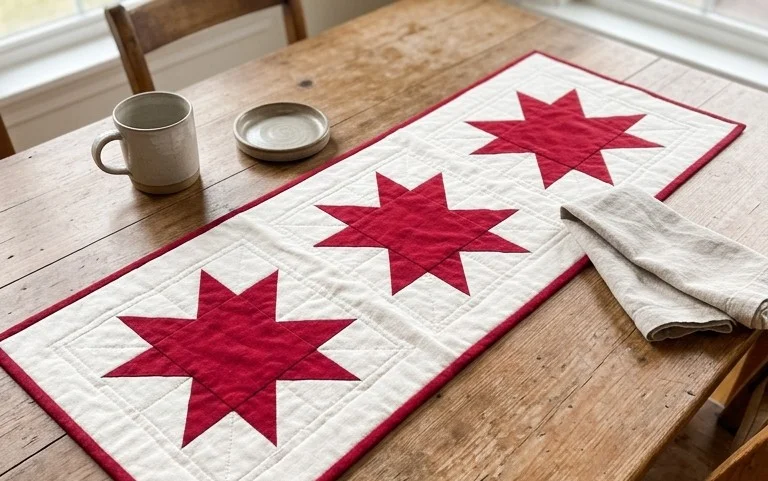
Cream and deep red crochet stars give this table runner a familiar Nordic look, with a handmade texture that feels at home on a winter table or a simple everyday setting. The repeated motifs create a clear pattern across the length of the runner, so each section feels satisfying to work as the design grows. It suits crocheters who enjoy home decor projects, and beginners can take their time learning how the stitches build the star shapes. It also makes a thoughtful gift for someone who likes handmade linens. In this pattern, you’ll learn how the repeated crochet stitches form the star design and how to keep the motifs even from one section to the next. Choose colors that match your room, then work at a comfortable pace and watch the runner take shape.
Why You’ll Love This Pattern
This cotton crochet dishcloth is worked flat in single crochet, so the fabric is sturdy, easy to count, and useful at the sink. A small skein is enough for one cloth, and the simple shape makes it a practical project for learning to keep even edges. The finished square also works as a washable face cloth or a small trivet, provided you use cotton yarn and keep it away from direct flame.
The repeated rows are easy to pick up again after a break. There are no increases, decreases, or seams to manage, and the pattern can be finished in an evening at a comfortable pace. Choose a light color if you want to see each stitch clearly, or use a darker shade if you prefer a cloth that hides everyday marks.
The rows were easy to count, and the cotton made a firm cloth that washed well. I finished mine in one evening.
— Maya, beginning crocheter
Pattern Overview & Skill Level
- Skill Level: Beginner. You need to chain and make single crochet stitches.
- Approximate Time: About 2–3 hours, depending on your pace and tension.
- Construction: The dishcloth is crocheted flat in rows from the bottom edge to the top. Each row has the same stitch count, and the finished piece is not seamed.
- Finished Dimensions & Sizing: About 7.5 × 7.5 in (19 × 19 cm) after washing and drying flat. Exact dimensions vary with tension.
Materials & Supplies Needed
- Yarn: About 90 yd (82 m) of worsted-weight #4, 100% cotton yarn in one color. Cotton absorbs water and tolerates regular washing. This estimate includes a small allowance for swatching and finishing.
- Hook Size: 5.0 mm / H-8 crochet hook. Use the hook that gives you the stated gauge; individual tension can make a different size more suitable.
- Notions: Tapestry needle for weaving in the ends, scissors, ruler or tape measure, and a removable stitch marker if you want to mark the first stitch of each row.
- Substitutions: Another worsted-weight cotton can be used. A cotton-linen blend may feel slightly firmer, while a soft cotton blend may make a less absorbent cloth. Avoid acrylic for a dishcloth used with hot cookware, since it can be damaged by heat. Thicker yarn or a larger hook makes a larger, looser cloth and uses more yarn; thinner yarn or a smaller hook makes a denser, smaller cloth.
Gauge: 14 single crochet stitches and 16 rows measure 4 in (10 cm) in blocked fabric. Make a small swatch if matching the finished size matters. If your swatch is wider than 4 in, try a smaller hook; if it is narrower, try a larger hook.
Stitch Guide & Abbreviations (US Terms)
- ch = chain.
- sc = single crochet. Insert the hook into the stitch, yarn over and pull up a loop, yarn over again, then pull through both loops.
- st = stitch.
- rep = repeat.
- RS = right side, the side you choose to show as the front.
The turning chain does not count as a stitch in this pattern. Work the first single crochet into the first stitch of each row, not into the turning chain. This keeps the sides straight and helps maintain 30 stitches across.
Step-by-Step Pattern Instructions
Dishcloth
- Foundation: With worsted-weight cotton and a 5.0 mm hook, ch 31. The first 30 chains form the foundation for 30 single crochet stitches.
- Row 1: Sc in the second ch from the hook and in each ch across. Turn. (30 sts)
- Rows 2–30: Ch 1, sc in each st across, turn. Repeat for every row, including Row 30. (30 sts each row)
- Check the shape: Lay the cloth on a flat surface. It should measure about 7.5 in (19 cm) square. If it is slightly taller or shorter, that is fine; stop when the shape is square or close to square, noting that the finished size will vary if you change the number of rows.
- Fasten off: After Row 30, cut the yarn, leaving a tail of about 6 in (15 cm). Pull the tail through the last loop to secure it.
- Finish: Thread the tail onto a tapestry needle. Weave it through several stitches on the wrong side, changing direction once so it is less likely to work loose. Weave in the starting tail in the same way, then trim the remaining yarn close to the fabric without cutting the stitches.
- Wash and shape: Wash the cloth according to the yarn label, then lay it flat and gently square the corners while it dries.
If the edges lean inward, check that you are making a stitch in the final stitch of every row. Missing that stitch is the most common reason a beginner’s rectangle becomes narrower at the top. Counting all 30 stitches before turning makes it easier to catch an error early.
Care & Washing Instructions
- Wash cotton in cool or warm water, up to 40°C (104°F), unless the yarn label gives a lower limit.
- Lay flat to dry, or tumble dry on low only if the yarn label permits it; high heat may shrink cotton.
- While damp, reshape the corners and sides by hand; blocking is optional for this everyday cloth.
Pro Tips & Common Mistakes to Avoid
- Keep your chain relaxed. A tight foundation chain can pull the bottom edge inward; if that happens often, make the chain with a hook one size larger, then switch back for Row 1.
- Count 30 stitches at the end of every row. Place a removable marker in the first stitch if it is hard to see where the turning chain ends and the row begins.
- Weave in each yarn tail on the wrong side, passing through several stitches and changing direction. Do not leave a short tail that can slip out during washing.
- To adjust the width, chain more or fewer stitches, then add one chain for the turning chain. Every extra foundation stitch adds one single crochet to each row and slightly increases yarn use; changing the number of rows adjusts the height.
Frequently Asked Questions
Can I use a different cotton yarn?
Yes. Choose a yarn close to worsted-weight #4 and check its care label. A different brand can change the cloth’s size and feel, so make a gauge swatch if you want to stay near 7.5 in (19 cm) square. Cotton is a suitable choice for a washable dishcloth; avoid yarn that cannot tolerate the washing method you plan to use.
How do I make the dishcloth larger or smaller?
For a wider cloth, begin with more chains, keeping one extra chain for turning; each added foundation stitch adds one stitch to every row. For a taller cloth, work more than 30 rows. A larger cloth takes more yarn and time, while a smaller one uses less. The dimensions also depend on your hook and tension.
Is this pattern suitable for a first crochet project?
Yes, if you know how to chain and make single crochet. The stitch count stays at 30 throughout, so there are no shaping instructions. The main challenge is working into the first and last stitches of each row to keep the sides straight.
May I sell dishcloths made from this pattern?
You can make and sell finished items only if the designer’s terms allow it. Check the pattern’s current usage and credit requirements before selling, and write your own product description and photographs rather than presenting the pattern as your own.
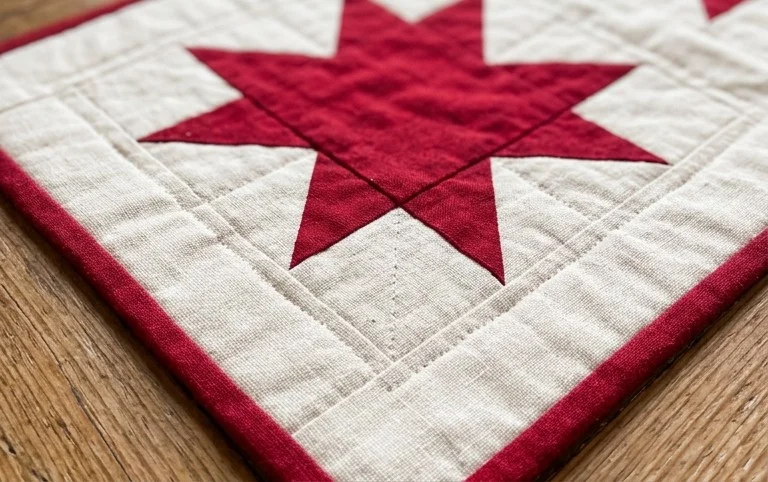
Once the last stitches are finished, the row of Nordic stars gives your table a handmade detail that feels especially welcoming during a family meal or a quiet cup of tea. For a simple variation, change the colors to soft blue and white, or use a single shade for a calmer look. Share a photo of your finished runner on Pinterest or your favorite social media channel; seeing different color choices is part of the fun. If you enjoyed working this design, take a look through the blog for more free crochet patterns, including useful home projects and gift ideas you can make at your own pace.